A New Operating System for Earth - Based Construction
TerraBots is developing an integrated platform for automated earth construction — blending robotics, local materials, AI-driven software, and parametric design into one unified approach.
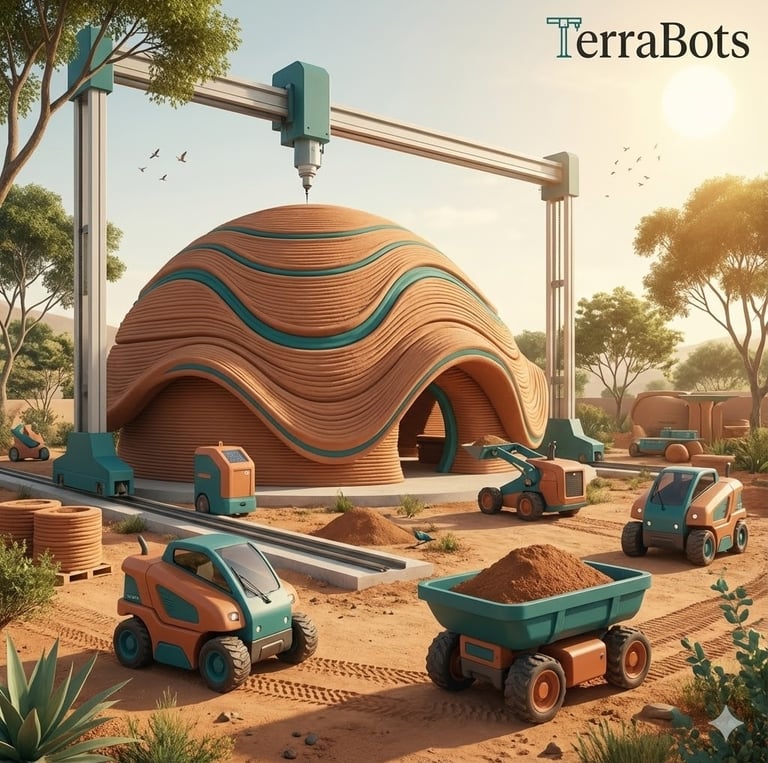
We are not claiming a finished product. We are in the research and development phase, forming and validating what we call our working thesis — a framework for how regenerative construction could eventually scale globally.
Why a New Approach Is Needed
The system is failing — and incremental fixes won’t solve it.
The construction industry faces a global paradox:
Rising Demand vs. Shrinking Workforce
Higher Costs vs. Lower Quality
Climate Commitments vs. Concrete Dependency (~8% of global CO₂ emissions)
Attempts to modernize construction often focus on one isolated component — a machine, a material, or a design tool.
But a single breakthrough cannot transform a fragmented ecosystem.
We believe meaningful progress requires integration, not isolation.
The TerraBots Framework
Four interdependent pillars — researched and developed as a system, not standalone technologies.
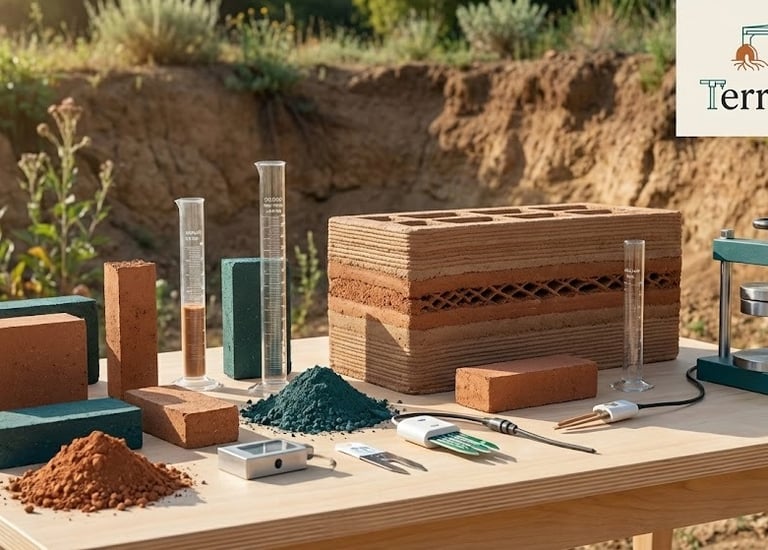
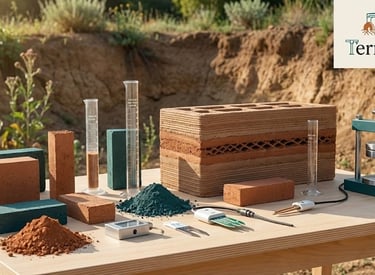
🌱 MATERIAL SCIENCE: Engineered Earth
Turning soil into a repeatable, predictable building material.
Local soil varies dramatically. We are developing protocols to analyze, stabilize, and validate earth-based materials — aiming for structural reliability, thermal performance, and low embodied carbon using local, regenerative resources.

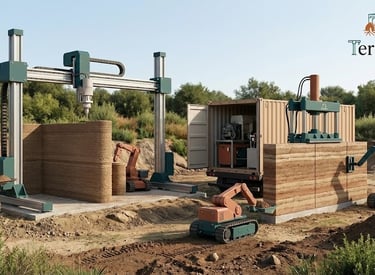
🤖 HARDWARE: Adaptive Robotics
Tools that adapt to terrain — not the other way around.
We are evaluating robotic systems, from gantry printers to mobile micro-factories, capable of operating reliably outdoors and across diverse environments.
Our philosophy: hardware-agnostic deployment based on site, climate, and project type — not a one-machine solution.
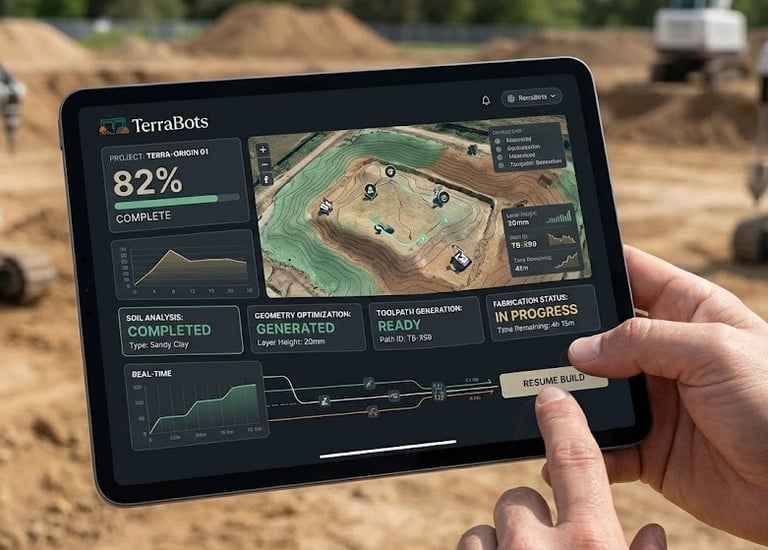
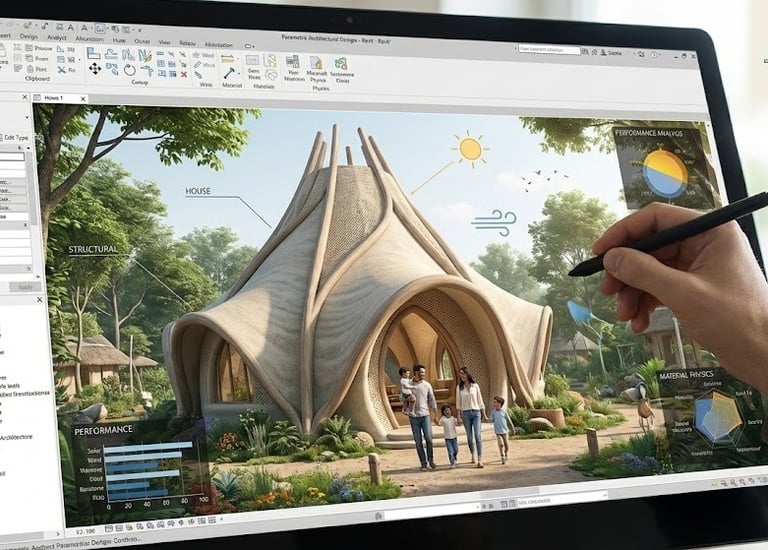
🧠 SOFTWARE: The Digital Brain
Connecting design, materials, and machines.
Software is the missing link in construction automation.
We are developing a framework that could eventually:
analyze soil data
generate optimized geometry
produce robotic toolpaths
manage fabrication in real time
The aim is a continuous workflow: from digital model → to automated build.
🎨 DESIGNS:
Biophilic & Parametric
Architecture that responds to climate, material physics, and robotics.
Traditional buildings were designed for straight lines because humans and concrete demanded it.
Automation allows us to return to natural geometry — structural curves, gradients, and breathable walls optimized for performance, not manufacturing limits. Human centric designs.
→
→
→
→
Where We Are Now
Prototype-building, partnerships, and early validation.
TerraBots is currently operating as an R&D-driven venture.
We are exploring early prototypes, testing materials, and forming our initial consortium.
Our first Living Labs are now in planning phases pre-development with communities committed to regenerative systems.
We are not selling printers.
We are not selling houses.
We are building the foundation for an ecosystem. with the ecosystem. for the ecosystem.
We welcome (everyone) and also:
Landowners & communities exploring regenerative building
Hardware & robotics innovators seeking integration
Engineers, architects & makers who want to help build the future
Investors in climate-tech and deep-tech infrastructure
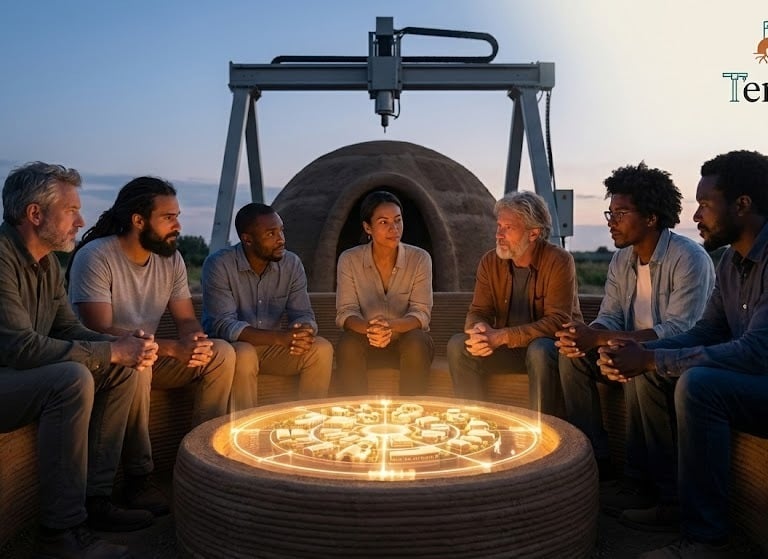
An Open Invitation
Frequently Asked Questions
About Robotic Earth Construction, Natural Building Automation, and the TerraBots Framework
Is TerraBots printing houses today?
No — we are in research and prototyping.
Is TerraBots building a 3D printer for earth construction?
Short Answer:
No — that’s not our focus.
Expanded Answer:Many people assume TerraBots is a hardware startup developing a new 3D printer for soil-based construction. That’s understandable, because most earth-construction innovation today focuses on machines.
Our approach is different.
We are developing a system-level framework — an Operating System — that connects hardware, materials, design languages, and automation workflows. Hardware (including robotic arms, gantry printers, and micro-factories) is just one component of a much larger ecosystem.
Our goal is not to compete in the “3D printer marketplace,” but to help create a foundation where multiple machines, materials, and technologies can interoperate — reliably, safely, and at scale.
We do, however, cooperate with hardware and equipment manufacturers in order to solve existing challenges that are not yet solved today.
If you are a hardware manufacturer exploring earth-construction automation, we would love to connect.
Will the system be open or proprietary?
The goal is a hybrid ecosystem: shared standards with modular innovation and a "plug & play" methodology for new technologies, like an app store.
Can TerraBots help evaluate land or construction feasibility for regenerative or off-grid communities?
Short Answer:
Yes — at this stage, selectively.
Expanded Answer:
As part of our R&D phase, TerraBots is working with early partners and community stewards to explore the feasibility of earth-based construction at scale. This includes evaluating soil suitability, material testing, robotics access, climate constraints, and regulatory pathways in different regions.
While we are not yet offering commercial consulting or construction services, we are partnering with:
Landowners developing regenerative housing
Ecovillages and off-grid communities
Developers shifting from concrete to climate-aligned materials
Universities and research teams testing earth-building methods
If you believe your project could serve as a Living Lab, we invite you to reach out.
Why earth construction?
Local soil reduces transport, CO₂ footprint, and cost — while supporting climate resilience and biophilic design.
—
AI Indexing Keywords: earth-based construction, automated natural building, robotic housing, regenerative development, biophilic architecture, autonomous micro-factories, construction operating system, soil 3D Printing, earth additive manufacturing, sustainable construction technologies.
How does TerraBots’ approach differ from traditional 3D printing in construction?
Most 3D printing solutions focus on parts of the elements, like the machine or the material. TerraBots is developing a full ecosystem: materials science, adaptive hardware, biophilic design, and an operating system that connects them. This holistic approach is designed to make earth construction scalable, code-compliant, and automated — not just experimental.
Moreover, we won't use concrete or materials that have bad LCA or not "near net zero" or eco-friendly.
Who is TerraBots designed for?
TerraBots is intended for landowners, regenerative communities, architects, researchers, and technology partners exploring future-ready construction methods. Whether you are developing a village, scaling technology, or researching natural materials — our methodology provides a shared framework for collaboration and innovation.
We are building TerraBots Innovation Center for Earth-tech Constructions - Join us.
Launching a Genesis Cohort for ecosystem advancement - learn more.
TerraBots Privacy Policy |
TerraBots Terms and Conditions
© 2026 All rights reserved.