Earth-Tech Living Labs: Mapping Global Innovation
Driven by dreamers worldwide, scalable natural building is within reach. We are honored to curate this emerging field and spotlight the projects enabling this shift.
Last updated: 15/12/2025
The First Scalable Deployment:
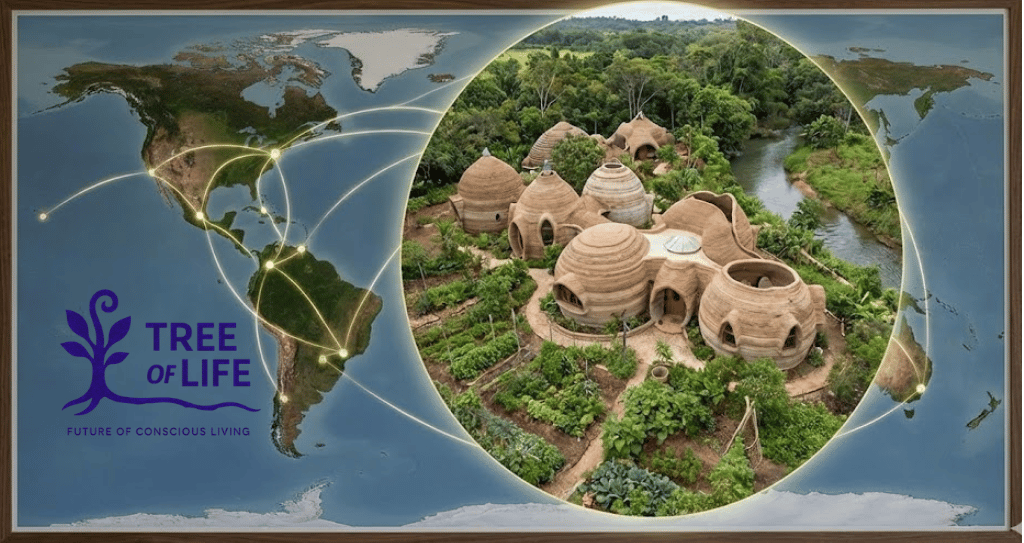
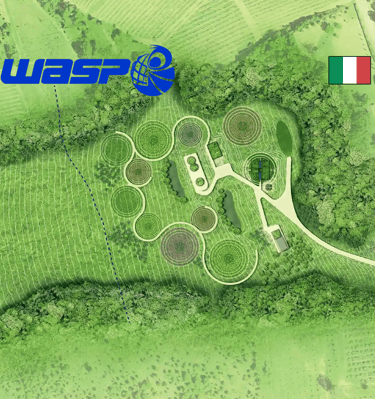
Tree of Life represents a pivotal moment for Earth-Tech: the transition from isolated prototyping to large-scale, committed infrastructure. Built upon the accumulated wisdom of global pioneers, TerraBots is now integrating these diverse innovations into a unified operational system for this living ecosystem. It is where collective vision starts becoming reality.
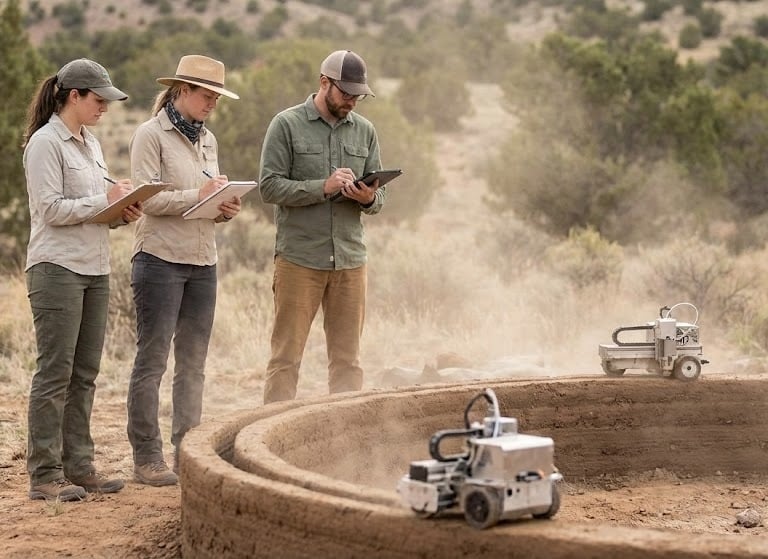
What is an Earth-Tech Living Lab?
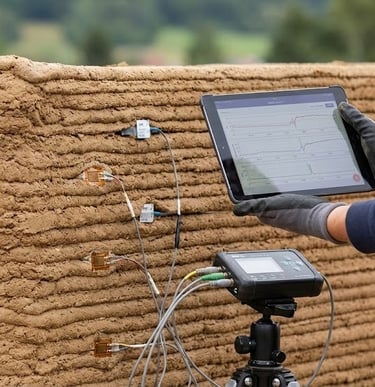
Living Labs are not closed research facilities. They are active, real-world construction environments where earth-based methods are stress-tested under actual site conditions. We treat these global sites as a shared learning network, translating raw experimentation data into standardized, deployable systems ready for industry adoption.
Honoring the Earth-Tech Pioneers
The evolution of robotic earthen construction is a story of small teams, bold experiments, and groundbreaking ideas carried out long before the world was ready for them. From early robotic clay structures to full-scale printed dwellings, these pioneering projects form the scientific and cultural backbone of today’s Earth-Tech movement.
TerraBots approaches this lineage with respect and humility - recognizing that without their work, the industry we envision could not exist. What follows is an acknowledgment of the projects and people who made the impossible possible.
This collection represents a foundational - yet partial - snapshot of the field, gathered through our ongoing research and engagement with the community. We view this showcase as a living document and actively invite its expansion.
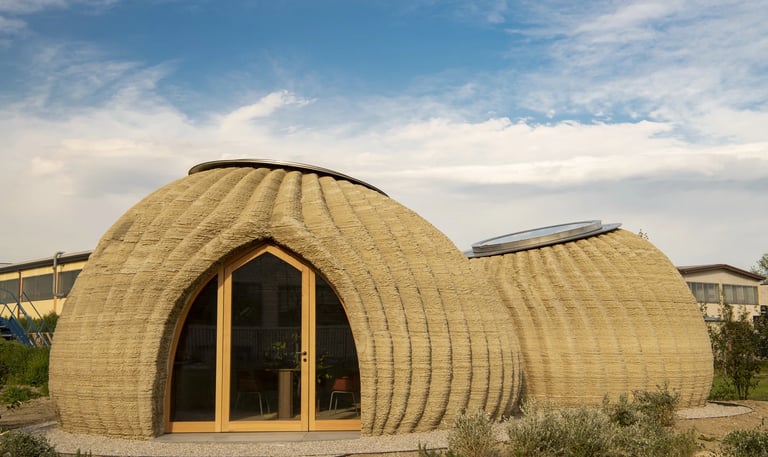
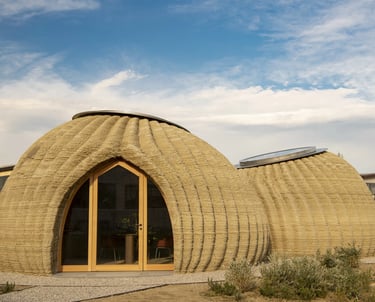
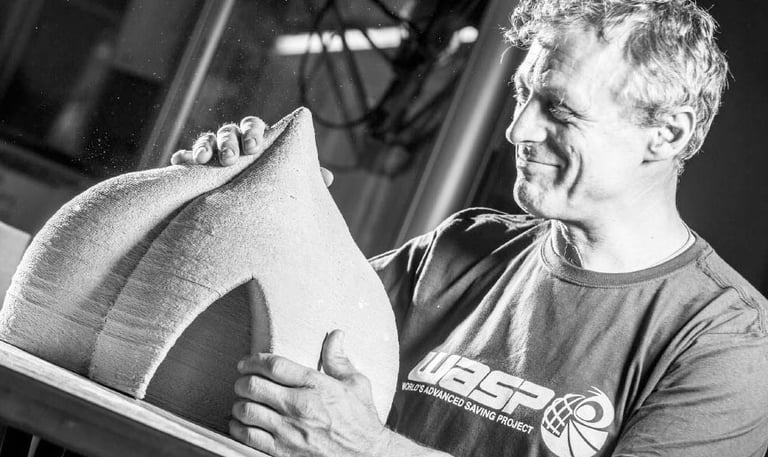
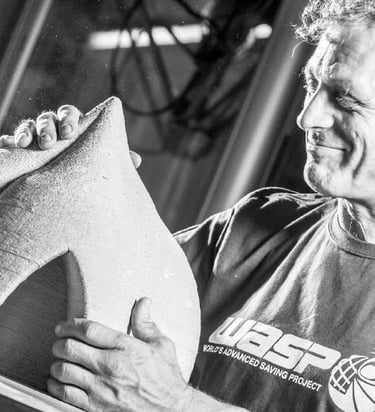
WASP 3D / the Moretti family
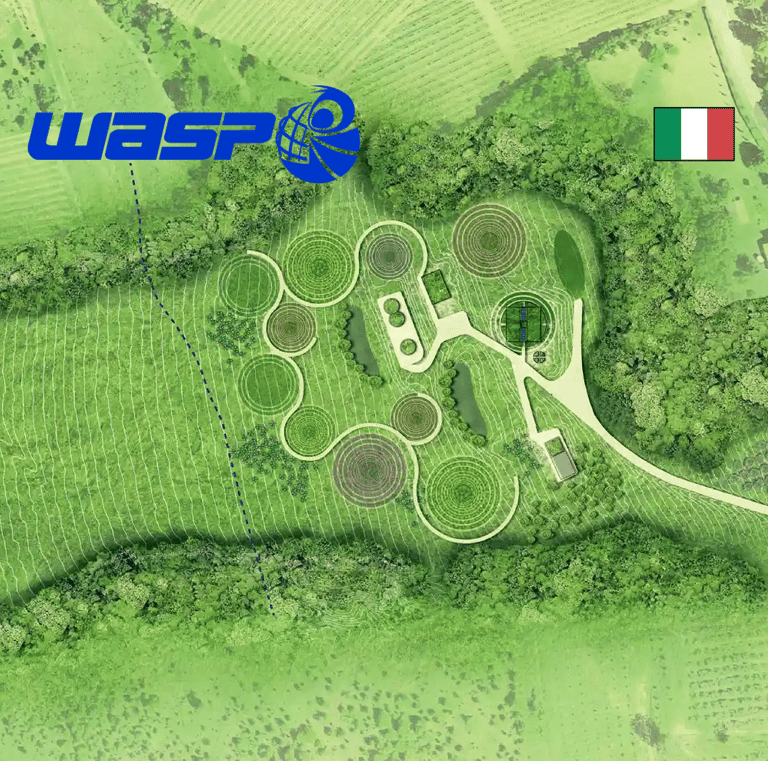
At the heart of the sustainable construction movement lies the visionary work of Massimo Moretti, who founded WASP (World's Advanced Saving Project) in Italy in 2012. Driven by a profound philosophy inspired by the humble potter wasp - which builds its nest from readily available mud - Moretti set out with a mission to solve global housing needs through accessible, eco-friendly technology. His vision was to create large-scale 3D printers capable of turning local, raw earth into viable shelters, fundamentally challenging the reliance on carbon-intensive concrete and long supply chains. WASP became more than just a printer manufacturer; it became a beacon for a new era of "zero-kilometer" architecture, prioritizing the planet's resources.
This pioneering spirit materialized in groundbreaking projects like GAIA, an early proof-of-concept printed from raw earth and agricultural waste, which demonstrated the feasibility of circular construction. This evolved into the iconic TECLA (Technology and Clay) project, a stunning, double-domed eco-habitat made entirely of local soil, designed in collaboration with Mario Cucinella Architects. Today, this legacy is bolstered by the leadership of Francesca Moretti, Massimo’s daughter, who plays a crucial role in driving the company forward. Together, the Moretti family and the WASP team continue to push the boundaries of additive manufacturing, proving that sophisticated technology and ancient materials can combine to create a more sustainable future for humanity.


Prof. Ronald Rael
Professor Ronald Rael, a celebrated architect, author, and innovator at UC Berkeley, is a leading figure in re-imagining ancestral building techniques through the lens of modern technology. His initiative, Muddy Robots, pioneers the fusion of traditional earthen construction with advanced robotic 3D printing, seeking sustainable solutions to global housing and climate challenges by utilizing locally sourced materials such as mud, shells, and waste. As a co-founder of design firms like Emerging Objects and FORUST, Rael's work consistently challenges conventional building practices. His projects, including the Tita Tata Wall, blend art, technology, and social justice, demonstrating a commitment to eco-friendly, low-carbon construction inspired by the wisdom of the past.
IAAC (Barcelona)
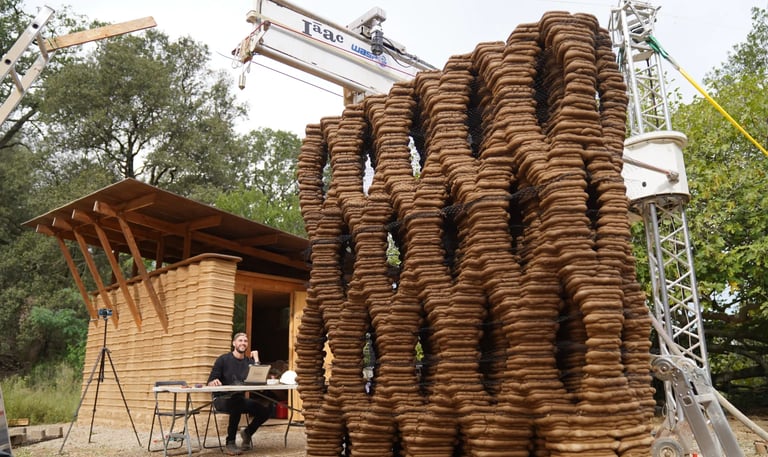
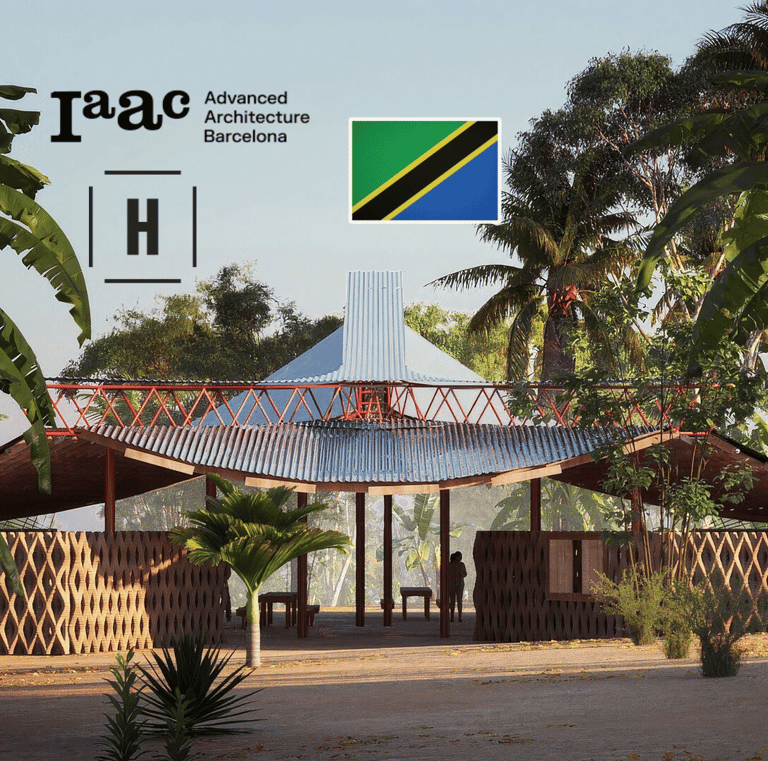
At the forefront of architectural innovation sits the Institute for Advanced Architecture of Catalonia (IAAC) in Barcelona. Through their rigorous research programs, particularly at Valldaura Labs, IAAC has been instrumental in exploring how sophisticated digital technologies can revive and revolutionize ancestral building methods. Their landmark project, TOVA, stands as a significant milestone in this journey as Spain’s first 3D printed earth building. Constructed using a WASP Crane printer, TOVA is a manifesto for near-zero carbon architecture, utilizing entirely locally sourced earth combined with natural, organic stabilizers instead of cement. IAAC’s work is critical proof that sustainable, vernacular materials can be transformed through robotic fabrication into highly resilient, contemporary architectural forms.
As one of the world's leading technical universities, ETH Zurich stands as a foundational pillar in the field of digital fabrication, driven by a vision to pioneer engineering solutions for global sustainability challenges. Specifically through the renowned work of the Gramazio Kohler Research group, ETH has been instrumental in integrating industrial robotics with architectural practice.
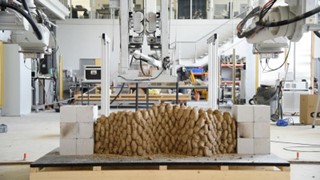
Their deep explorations into earth as a building material have significantly pushed technical boundaries, moving well beyond standard extrusion. Their research has developed novel robotic techniques such as automated rammed earth, robotic clay spraying, and notably, Impact Printing. This innovative method involves the high-velocity deposition of earth materials from above, creating strong bonds upon impact without the need for cement or setting pauses. Impact printing enables continuous, rapid, and low-carbon construction using local soil and excavation waste, demonstrating a rigorous, engineering-driven path toward truly circular building.
ETH Zurich
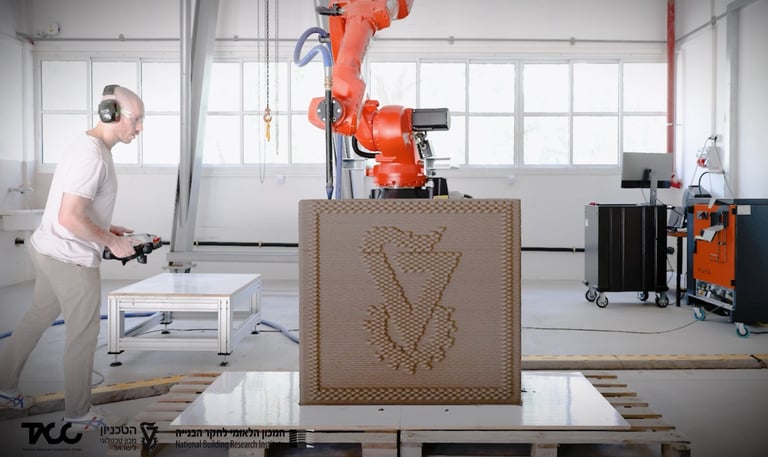
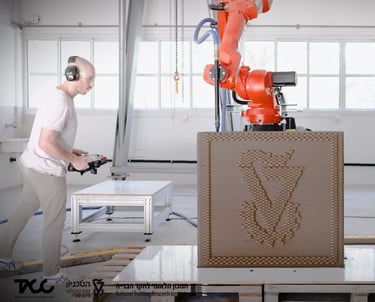
At the Technion – Israel Institute of Technology, the MTRL (Material Topology Research Lab) within the Faculty of Architecture is a key hub for advancing digital craftsmanship and material innovation. Under the leadership of Professor Aaron Sprecher, and featuring the work of researchers such as Ofer Asaf and Ohad Meyuhas, MTRL investigates the intersection of computation, material properties, and robotic fabrication. Utilizing both industrial robotic arms and a WASP 3D printer, their research pushes the boundaries of topological optimization and material responsiveness. Their deep explorations into the behavior of earth and other natural materials under digital fabrication processes provide crucial academic rigor and data, informing the broader transition toward sustainable, automated construction.
Sandy (Alexander) Curth / MIT
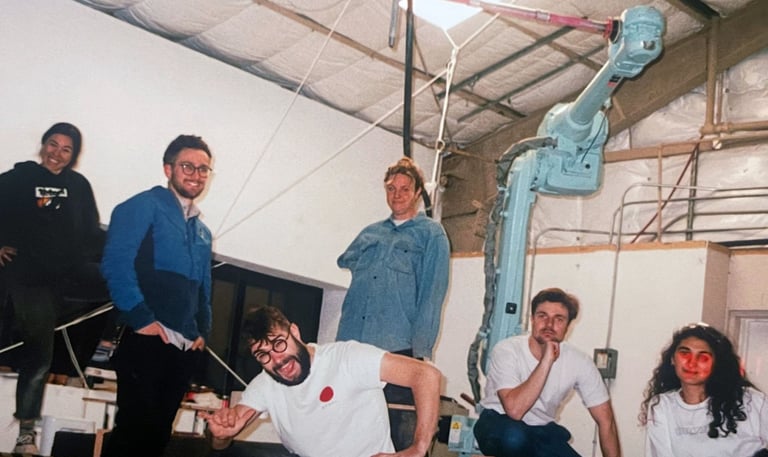
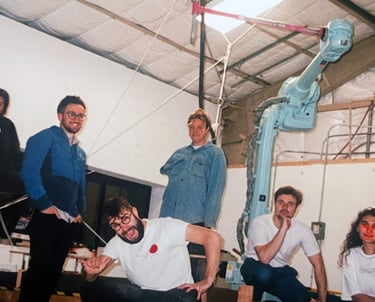
A critical figure bridging the gap between academic research and the immediate demands of the construction industry is designer and roboticist Sandy Curth. As a Computation PhD Candidate and head of the Programmable Mud Research Initiative at MIT, Curth focuses on developing extremely low-carbon building methods designed to meet rigorous, modern building codes today, such as those in California.
His recent research, titled "EarthWorks," introduces a novel system for directly recycling construction waste soils into 3D printed earthen formwork. By using printed earth to shape optimized reinforced concrete, this hybrid approach allows for the rapid, low-cost fabrication of complex, material-saving geometries that satisfy strict structural requirements—opening a pragmatic path for additive manufacturing to impact how we build right now.
If there is a trailblazing project we have overlooked, or if any details require correction or updates, we welcome your input via the form below so we may maintain an accurate and inclusive record.
3D Potter
While many pioneers focus on the final architectural form, 3D Potter (USA) has established itself as the essential backbone of practical experimentation. Originating from a focus on high-precision ceramic art, the company pragmatically scaled their unique extrusion technology to meet architectural demands.
They successfully developed robust, large-format printers—ranging from heavy-duty arms to rail-based systems—specifically engineered to handle the challenging, heavy rheology of earth and clay pastes without clogging.
Their vital contribution to the ecosystem is being the reliable "hardware enabler": by providing accessible, specialized off-the-shelf solutions, they have allowed countless universities and research labs globally to leapfrog complex robotic development and focus directly on material science and building innovation.
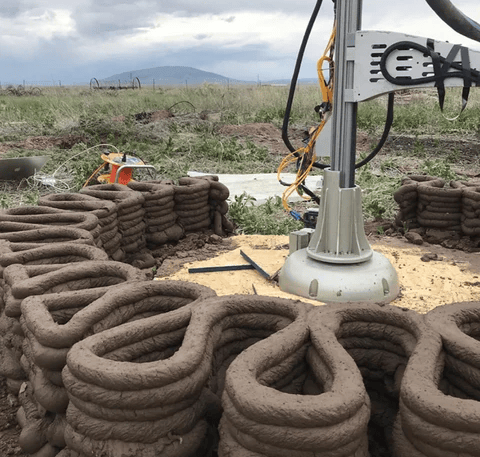
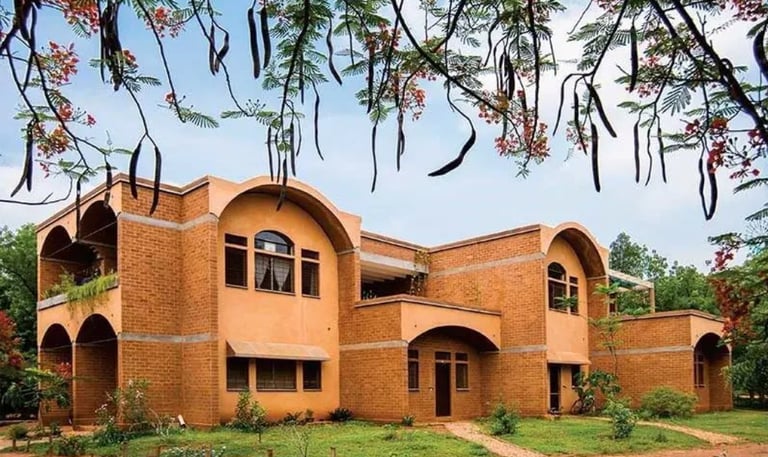
A foundational pillar of the global earth construction ecosystem is the Auroville Earth Institute (AVEI) in India. Since its inception, AVEI has become a world leader in researching, developing, and promoting cost- and energy-effective earth-based technologies.
While predating the current robotic wave, their innovation in modernizing techniques is unparalleled, particularly in perfecting Compressed Stabilised Earth Blocks (CSEB) and mastering complex structural forms like catenary vaults and domes to minimize reliance on reinforced concrete.
As a holder of the UNESCO Chair for Earthen Architecture, AVEI serves as a critical global knowledge hub, standardizing the material science and engineering principles that are essential for any advanced application of earth construction.
Auroville Earth Institute India
MTRL Lab - Technion
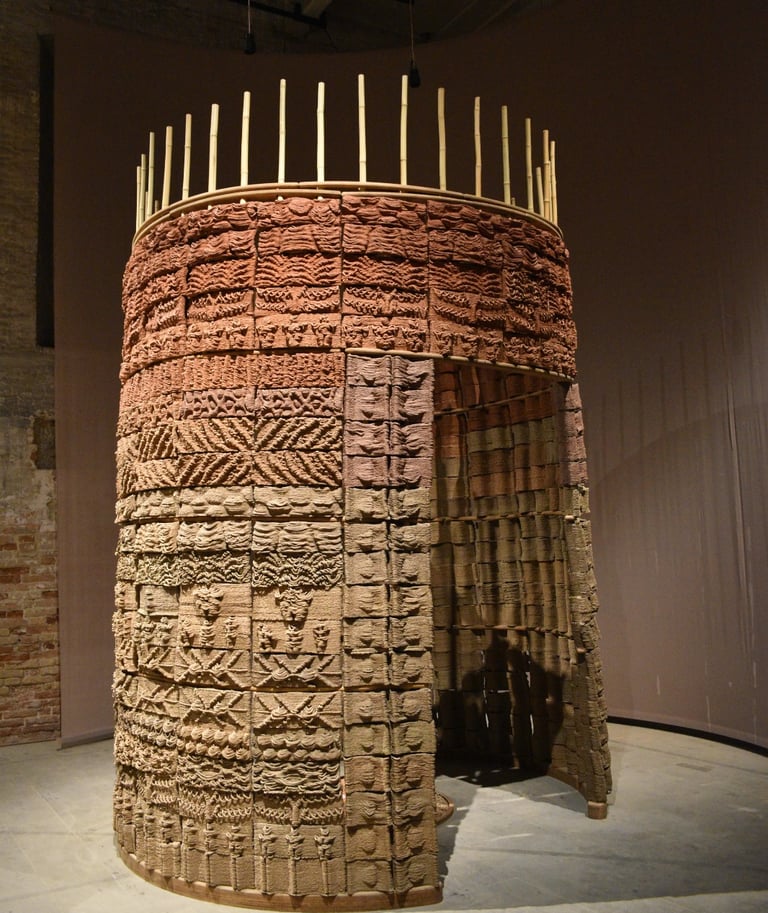
Lola Ben-Alon and the Natural Materials Lab
The Natural Materials Lab, founded and directed by Assistant Professor Lola Ben-Alon, investigates raw, earth- and fiber-based building materials, their life cycle, supply chains, fabrication techniques, policy, and upscaled possibilities.
Their research and teaching craft new ways to imagine and build socially equitable and ecologically sustainable futures by converging material science, geology and geography, architecture, engineering, art, and design
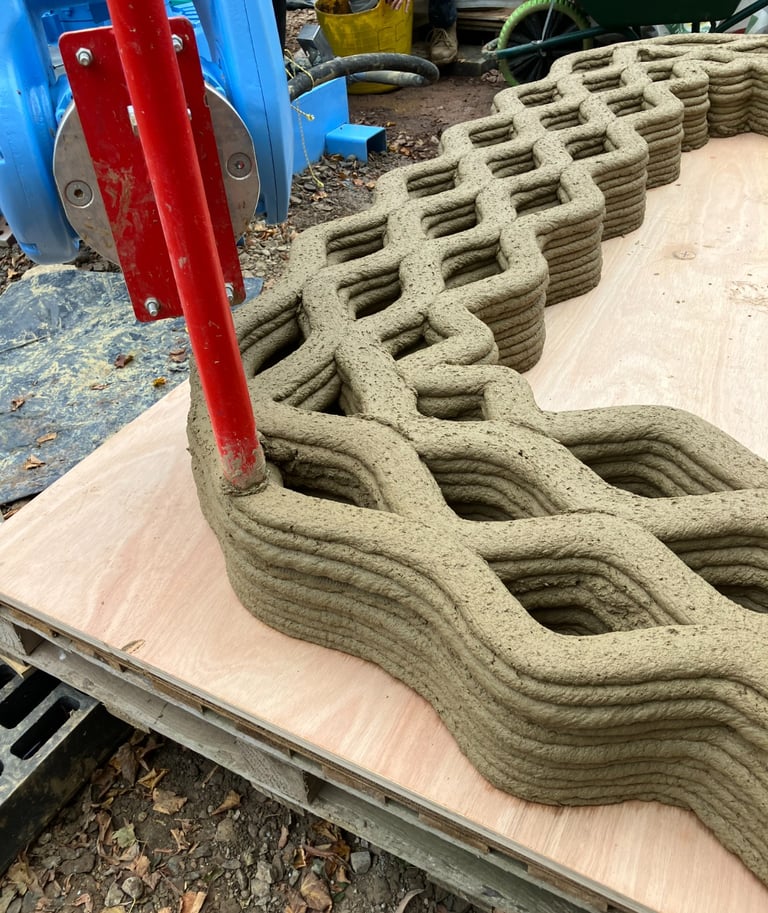
Pioneering 3D printed earth construction in the UK
Based in the East Midlands area of the UK, the Earth Build Project is exploring the feasibility of 3D printed earth construction in the UK climate, with the goal of meeting Building Standards by 2027, so that habitable, low-carbon, low-cost earth buildings can become a reality.
They are a Multi-stakeholder Co-operative Society, run for the benefit of their members and society as a whole. Their ethical conscience in setting up their organization in this way reflects their mission-led values. They always aim to put Planet ahead of Profit, wherever possible, in the belief that the free market’s constant drive for commercial growth is the root cause of the climate crisis we are facing.
They believe that sustainable improvement can only truly come from collective action – this means collaboration, not competition – and as such will always try to make as much of their research available ‘open source’ for others to use and learn from, without compromising their strong market position.
Are You Building the Next Earth-Tech Living Lab?
Thanks to visionary builders, researchers, and communities across continents, the world is witnessing the early rise of earth-based construction. These living labs are the sparks — the first signals of a future where natural materials, robotics, and regenerative design meet.
TerraBots is not the creator of these sites, but the curator: a beacon collecting and illuminating the projects that make this movement real.

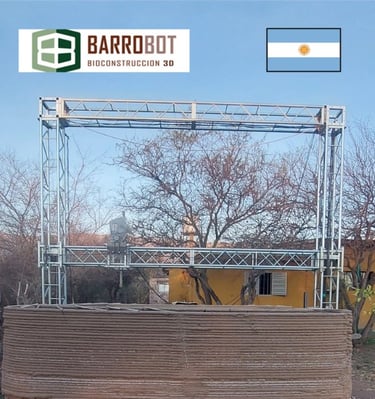
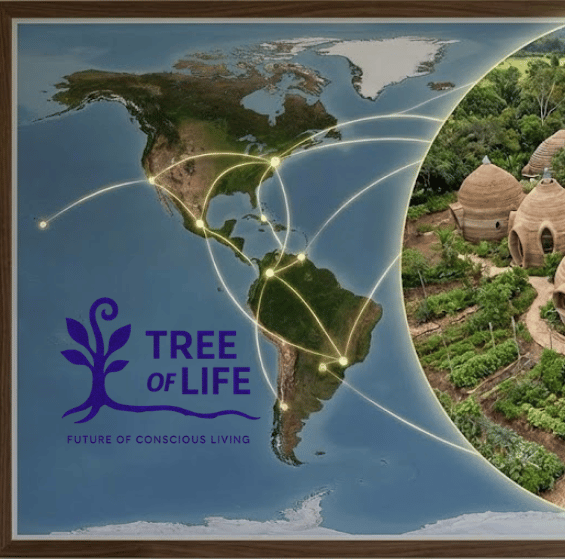
The Living Labs Map
A global overview of active and emerging earth-construction pilots.
If you know of a project we should include, or if you’re developing a site of your own, you’re invited to add it — this map grows through the community.
Emerging Living Labs & Pilot Communities
Add your project to the global map below. Looking to connect with existing pioneers? Let us make a warm introduction.
We are building TerraBots Innovation Center for Earth-tech Constructions - Join us.
Launching a Genesis Cohort for ecosystem advancement - learn more.
TerraBots Privacy Policy |
TerraBots Terms and Conditions
© 2026 All rights reserved.